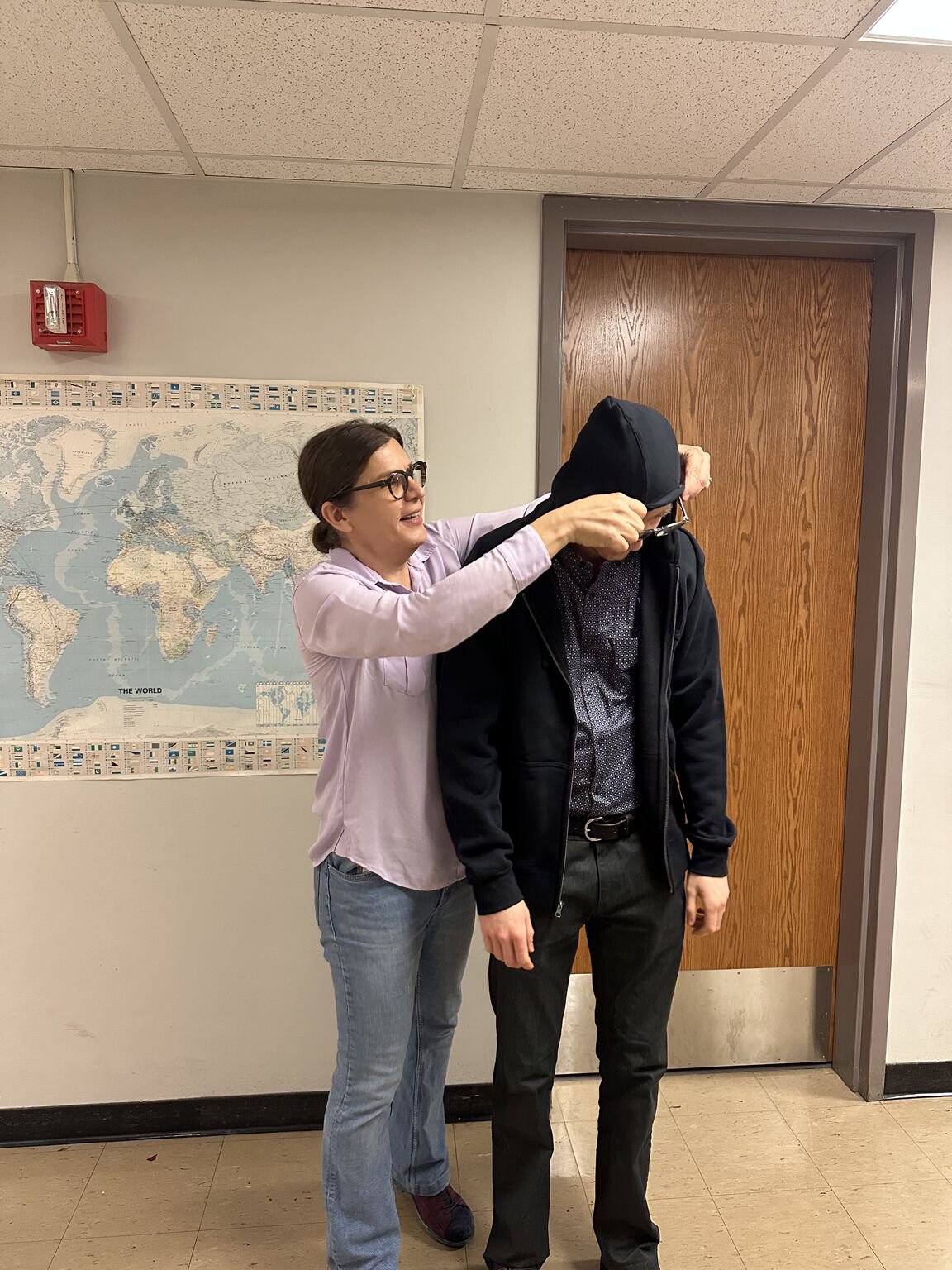
Congratulations, Dr. Wylie!
August 7, 2026
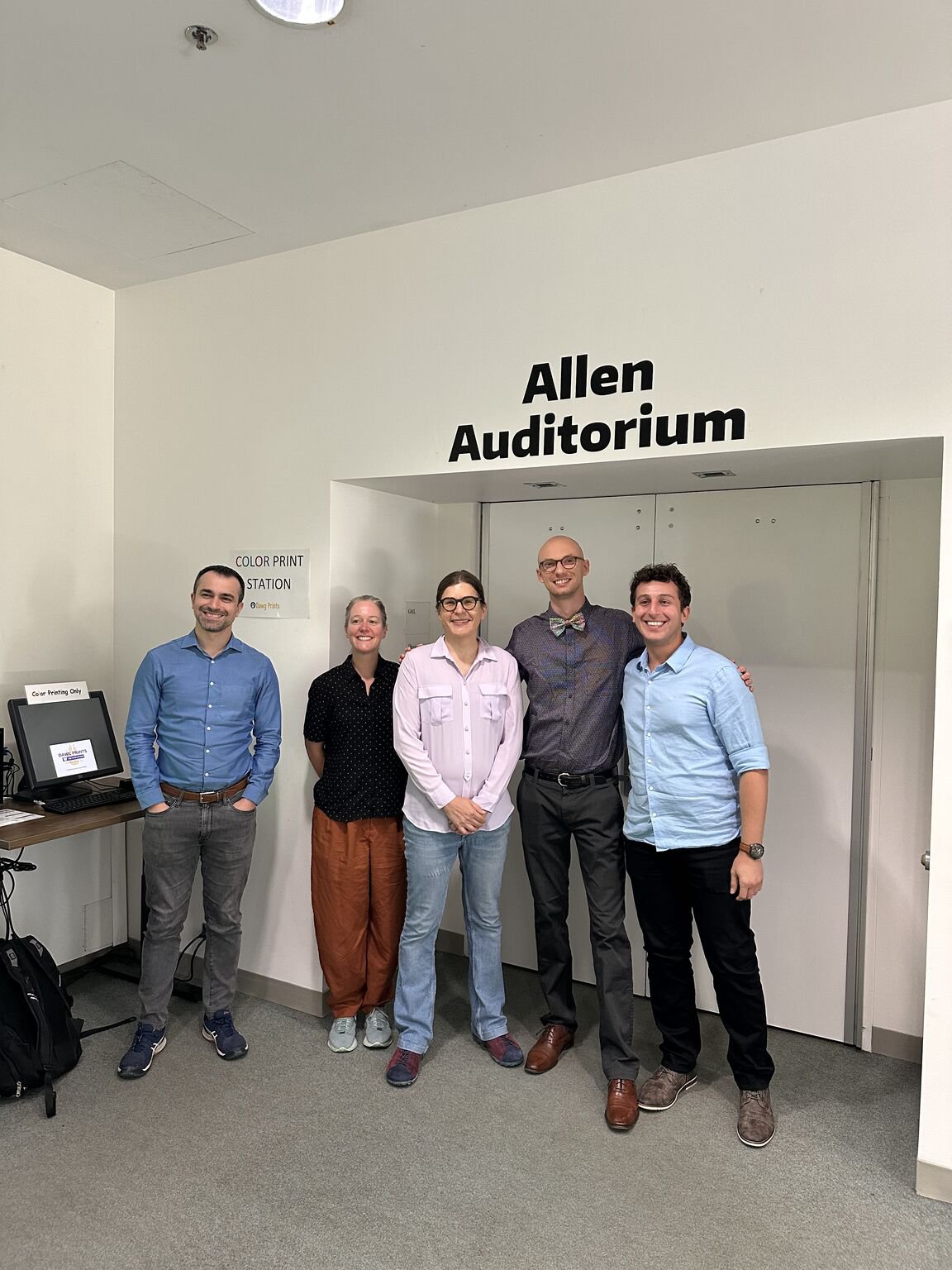
Zachery (Zach) Wylie successfully defended his dissertation, titled “Nanostructured Materials for Sustainable Energy: Synthesis, Assembly, and Recovery,” on August 7, 2026, in Allen Auditorium. He became the 19th PhD student to graduate from the Pozzo group, and now holds a PhD in Chemical Engineering.
Zach’s work focuses on fundamental nanomaterials research toward the replacement and recycling of critical minerals in clean energy technologies such as batteries. His dissertation is available in ResearchWorks, and his research includes “Synthesis, assembly, and electrochemical performance of ultrasmall Sb₂S₃ nanoparticles” in the Journal of Materials Chemistry A.
Read the dissertation abstract
As demand for critical materials rises, sustainable solutions for both recovery and substitution are key to meeting global needs. The electrification of emerging and evolving industries, including transportation and grid storage, will drive a massive increase in demand for high-performance electrochemical materials, as well as create an urgent need for effective recycling methodologies to preserve supply chains. Meeting these challenges requires innovations both in the design of new functional nanomaterials and in the development of efficient, selective recovery systems. To these ends, this thesis presents two complementary projects: the synthesis and characterization of mesophase-forming ultrasmall antimony (III) sulfide (Sb₂S₃) nanoparticles for applications in lithium and sodium-ion batteries, and the investigation of crystallization through reaction-diffusion precipitation processes in hydrogel systems for hydrometallurgy separations. Both efforts leverage nanoscale structures and employ small angle X-ray scattering (SAXS) to characterize material structure across length scales. In the first part of this work, a novel, scalable, and room-temperature synthetic pathway to Sb₂S₃ nanoparticles is developed using readily available precursors under open-atmosphere conditions. The resulting nanoparticles spontaneously assemble into stable mesophases exhibiting unexpected rodlike hexagonal packing despite lacking crystallographic registry. SAXS is used to probe the self-assembly of the particles, revealing the influence of ligand chemistry and solvent environment on the assembly process. These ultrasmall particles exhibit high specific capacity, rapid charge/discharge kinetics, and excellent cyclability when integrated into lithium- and sodium-ion battery systems. Next, critical material recovery and crystallization is explored using hydrogels loaded with selective precipitating agents. Reaction-diffusion coupling within the gels can enable the spatial and temporal encoding of a crystallization pathway. This allows the pathway to be probed using in situ ultra-small, small-, and wideangle X-ray scattering (USAXS/SAXS/WAXS) alongside traditional ex situ imaging. The interplay between gel properties, precipitant chemistry, ion concentration, and diffusion behavior is systematically investigated while the crystallization pathway is dissected. This work elucidates how reaction-diffusion dynamics can be harnessed to study crystallization to motivate separation processes. Throughout both studies, SAXS serves as a powerful and versatile characterization tool, enabling high-throughput, in situ, and ex situ probing of structure and dynamics across scales.
Zach represents the broad educational experience we aspire to for all of our graduate students. He mentored a record 13 undergraduate researchers and wrote a paper on working with undergraduates in research teams, “Exploring Team-Based Undergraduate Research to Expand Opportunities”, presented at the 2026 ASEE Annual Conference & Exposition. He also worked with our PREM partners at the University of Hawaiʻi at Mānoa and with colleagues at Pacific Northwest National Laboratory, including Dr. Elias Nakouzi. Thank you to everyone who partnered to support Zach along this journey.
Congratulations, Dr. Wylie!
Connect with Zach: LinkedIn